Subscriptions Are the New Growth Engine, And the Enterprise Is Re-Architecting Around Them
A few years ago, subscriptions were a commercial tactic.
Today, they are a board-level growth strategy.
Across industries, enterprises are shifting away from one-time transactions and toward subscription-led business models that prioritize predictability, customer lifetime value, and long-term relationships. This shift is not cosmetic. It is forcing organizations to re-architect how CRM, Commerce, and ERP work together — with Subscription Cloud at the center.
The Real Shift: From Selling Products to Managing Relationships
In traditional commerce, success was measured at checkout.
In subscription businesses, success is measured over time.
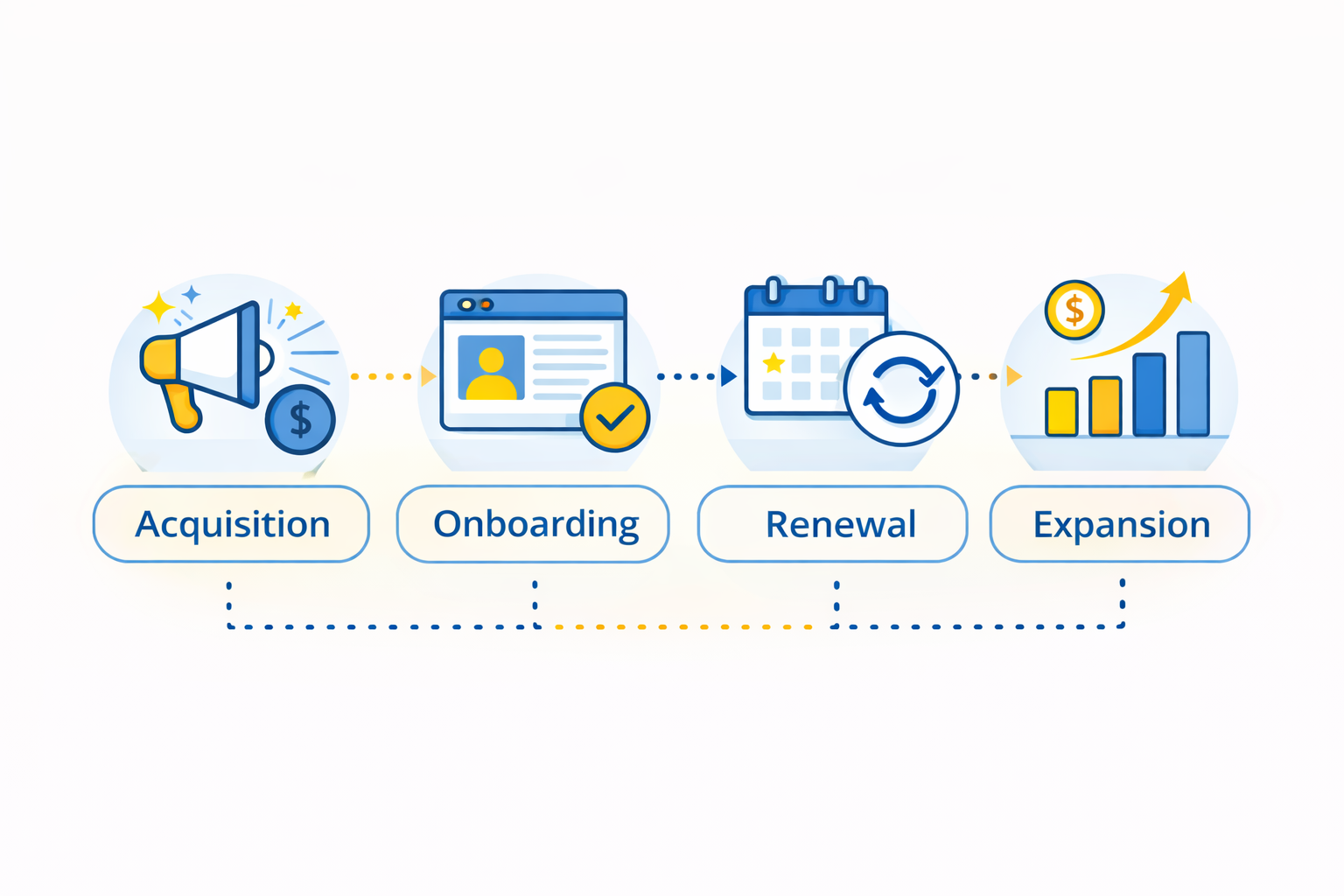
The moment a customer subscribes is not the end of the journey — it’s the beginning. Revenue grows through renewals, upgrades, usage expansion, and retention. That requires systems designed not just to sell, but to manage relationships continuously.
This is why subscriptions are becoming the hero of modern revenue models — and why enterprises are rethinking their technology foundations.
Why Subscriptions Break When Architecture Doesn’t Change
Many organizations attempt subscriptions by adding billing on top of existing systems. It works — briefly.
At scale, cracks appear:
- CRM lacks visibility into active subscriptions and entitlements
- Commerce captures orders, but lifecycle changes fall outside the flow
- ERP struggles with billing accuracy, revenue recognition, and adjustments
- Finance and sales operate on different versions of the truth
Subscription success demands tight orchestration between systems — not loose integration.
Subscription Cloud as the Enterprise Backbone
Leading organizations are now treating Subscription Cloud as core enterprise infrastructure, deeply connected to:
- CRMfor customer context, sales, and lifecycle intelligence
- Commercefor acquisition, self-service, and experience
- ERPfor billing, invoicing, and financial governance
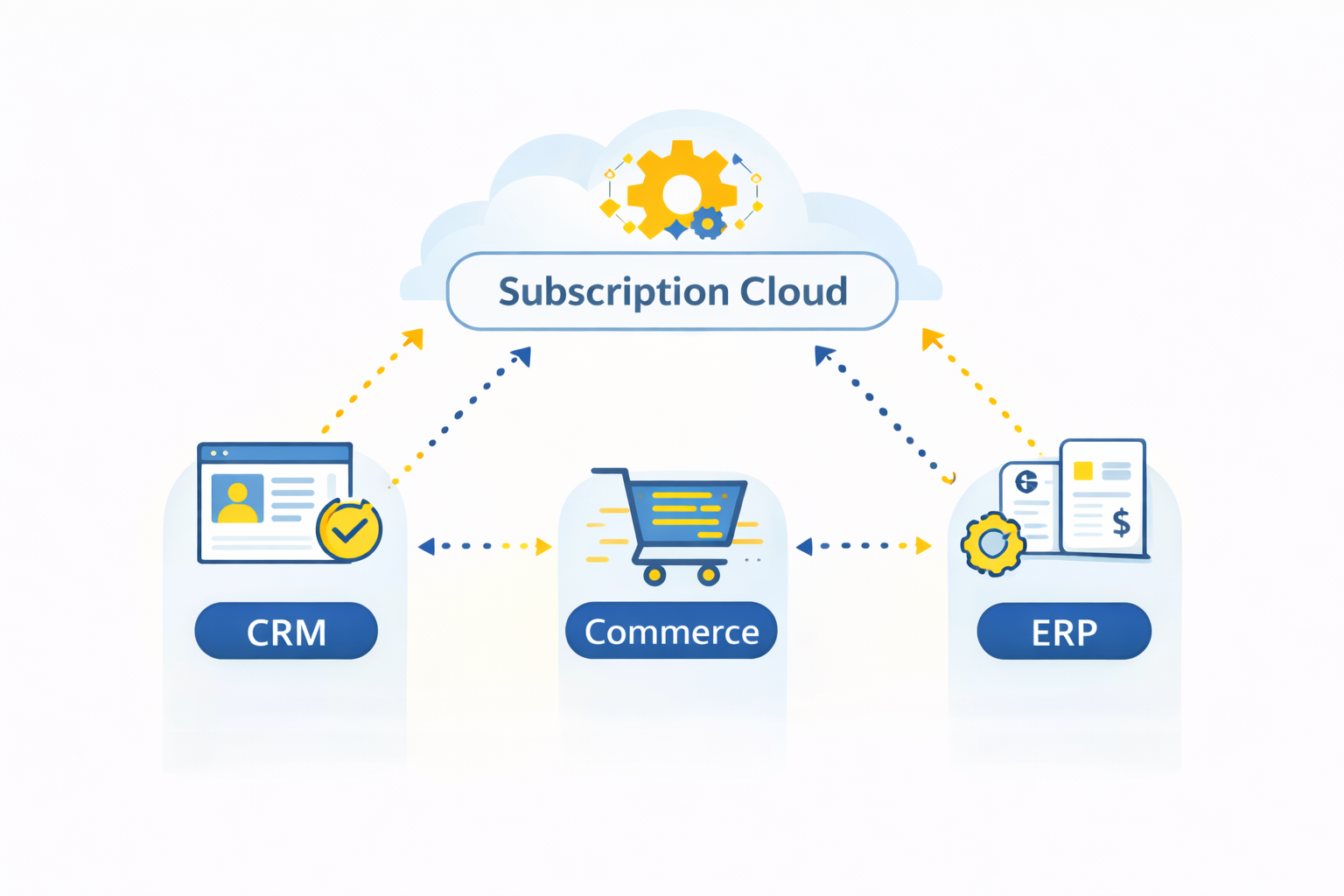
When these systems operate as one, subscriptions scale with confidence — across channels, geographies, and customer types.
One Model, Two Worlds: B2C and B2B Subscriptions
While B2C and B2B subscriptions differ in execution, the strongest organizations build them on a shared subscription foundation.
Suavisinc has helped clients support:
- Consumer subscriptions with flexible plans and self-service
- Enterprise subscriptions with contracts, pricing tiers, and approvals
- Usage-based and hybrid subscription models
- Guided selling and CPQ-driven subscription configuration
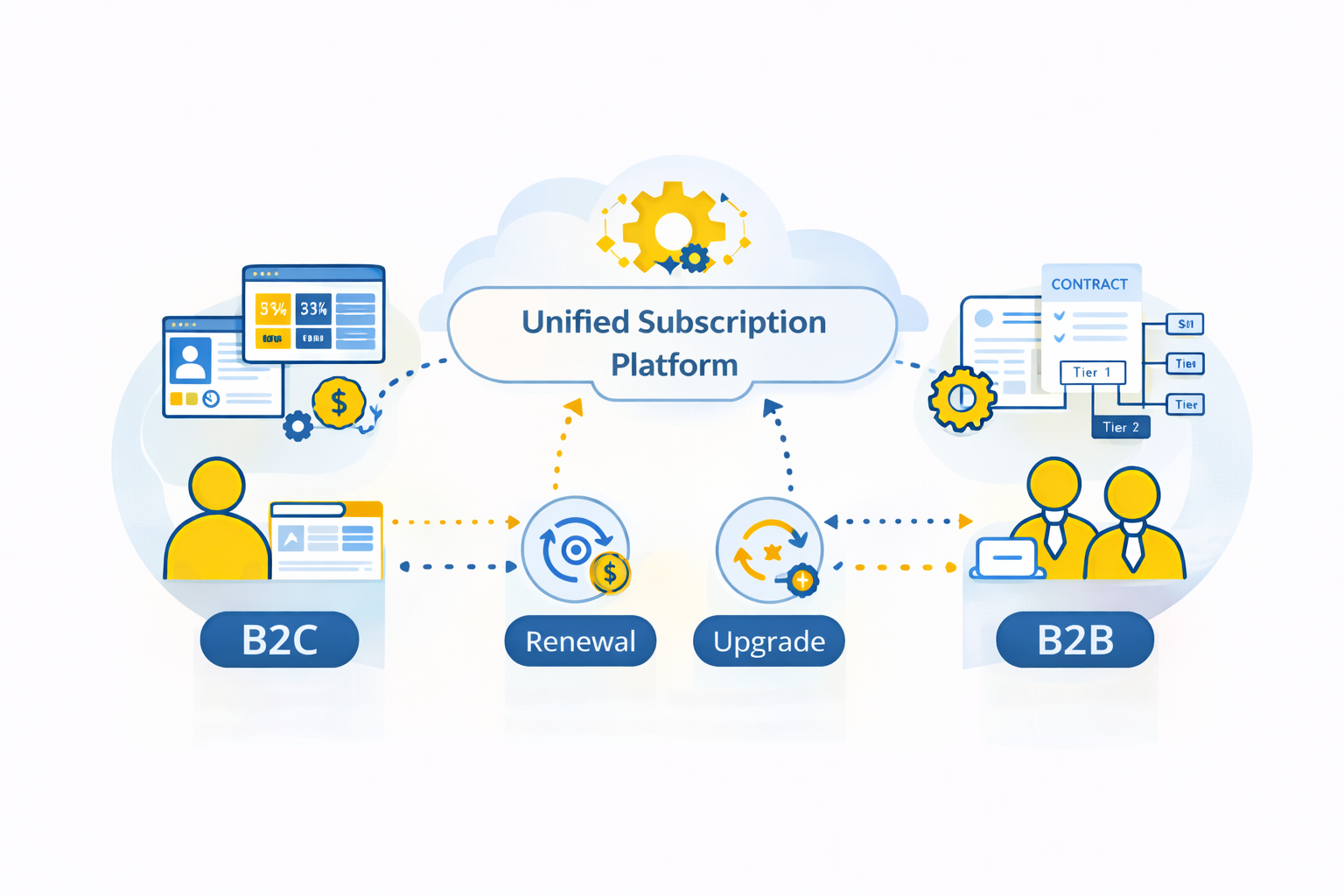
This approach reduces complexity, speeds innovation, and ensures financial consistency — without forcing separate platforms for each model.
Where Suavisinc Makes the Difference
At Suavisinc, we don’t start with billing features. We start with business intent.
We help leadership teams:
- Define subscription models aligned to growth strategy
- Design subscription journeys across CRM, Commerce, and ERP
- Implement scalable, event-driven subscription lifecycles
- Enable renewals, upgrades, and expansion as core revenue motions
The outcome is not just a subscription system — but an organization that operates as a subscription business.
The Executive Reality
Subscriptions change the revenue conversation.
They move growth from “won or lost” to earned, retained, and expanded.
They replace volatility with predictability.
And they reward organizations that invest in architecture — not shortcuts.
Talk to Suavisinc
If subscriptions are central to your growth strategy, Suavisinc helps you design and deliver Subscription Cloud platforms that scale across B2C and B2B.